
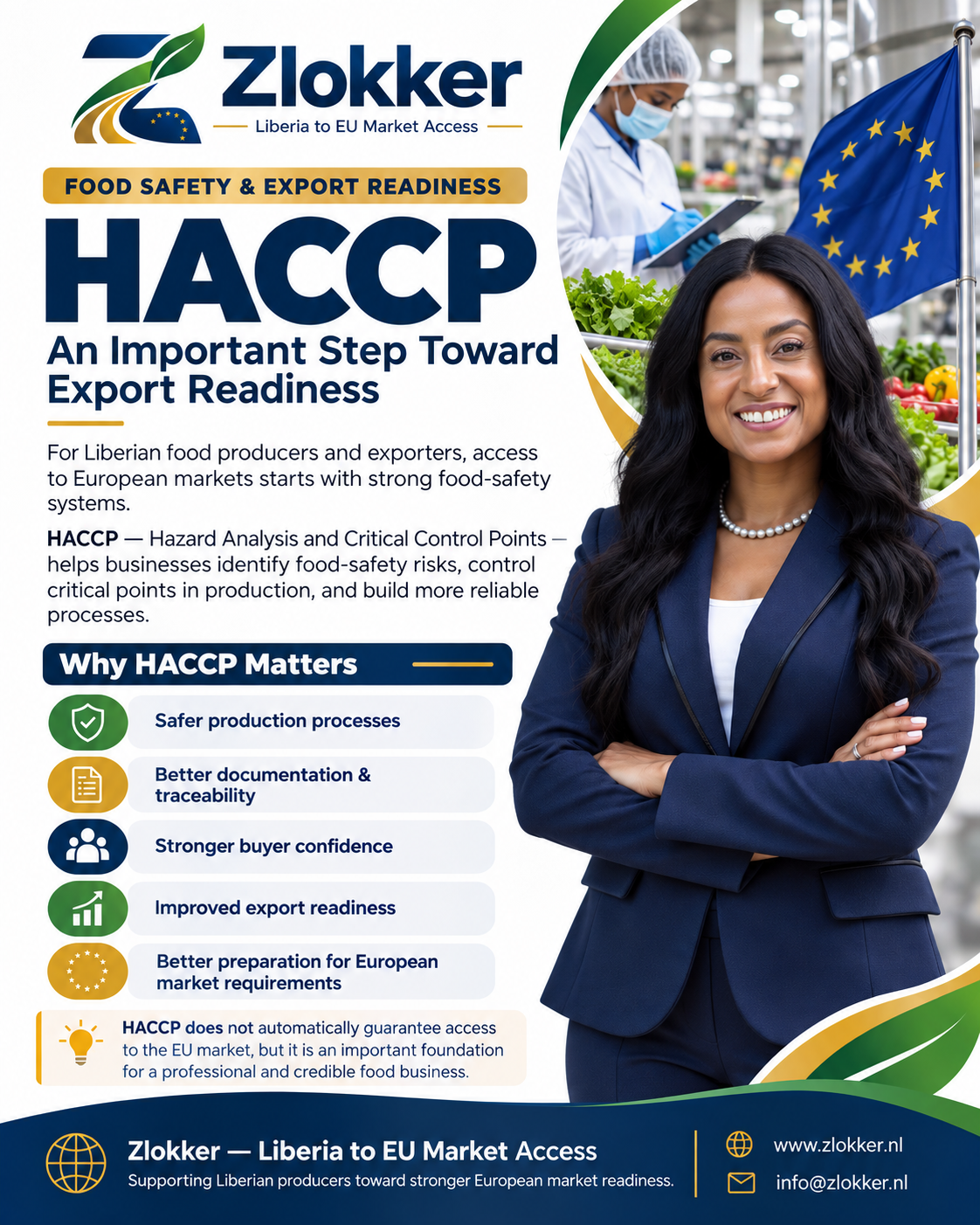
For Liberian food and agri-food producers, food safety is an important part of export readiness.
European buyers want more than a good product. They also want confidence that food is produced, handled and stored in a safe and controlled way.
One of the best-known food safety approaches is HACCP — Hazard Analysis and Critical Control Points.
What Is HACCP?
HACCP is a structured food safety system used to identify, control and monitor risks that could affect food safety.
These risks may include:
- Biological hazards
- Chemical hazards
- Physical hazards
- Cross-contamination
- Poor hygiene
- Unsafe storage
- Incorrect processing conditions
The goal is to prevent food safety problems before they happen.
Why Is HACCP Important for Liberian Producers?
A producer may have a good product, but that does not automatically mean the business is ready to supply professional buyers.
European buyers may expect clear food safety procedures, records and controls.
For Liberian producers, HACCP readiness can help strengthen:
- Food safety
- Production control
- Documentation
- Traceability
- Buyer confidence
- Export readiness
What Does HACCP Readiness Include?
Preparing for HACCP can involve several areas.
Food Safety Documentation
A company should have clear procedures and records for how food is produced, handled and monitored.
Hazard Identification
Possible food safety risks must be identified at each stage of production.
Critical Control Points
Some steps in the production process may require specific controls to prevent or reduce food safety risks.
Monitoring Procedures
Companies need to know how important controls are monitored and recorded.
Corrective Actions
There should be clear actions for what happens if something goes wrong.
Hygiene
Good hygiene practices are essential for safe food production.
This may include:
- Personal hygiene
- Handwashing
- Cleaning
- Pest control
- Protective clothing
- Equipment hygiene
Record Keeping
Food safety systems depend on reliable records.
These may include:
- Cleaning records
- Production records
- Temperature records
- Supplier records
- Batch records
- Quality checks
HACCP Is More Than a Certificate
HACCP should not be treated only as a document or certificate.
A good HACCP system must reflect what actually happens in the production facility.
The procedures, records and controls should match the real production process.
For this reason, preparation often starts with understanding the production flow and identifying where risks may occur.
How Zlokker Can Support
Zlokker supports Liberian food and agri-food producers with HACCP and food safety readiness.
This may include:
- Production process review
- Hygiene assessment
- Food safety documentation review
- Traceability checks
- Record-keeping review
- Storage assessment
- Identification of readiness gaps
- Site verification in Liberia
- Export readiness assessment
Where specialist certification is required, Zlokker can work alongside qualified food safety and certification professionals.
For Project Contractors and Development Programmes
HACCP readiness can also form part of wider producer development programmes.
Zlokker can support projects by:
- Screening participating producers
- Assessing current food safety practices
- Identifying gaps
- Monitoring improvements
- Verifying implementation
- Reporting progress
Preparing for European Buyers
For many food products, market access starts before the first buyer conversation.
A producer that can demonstrate better hygiene, documentation, traceability and food safety controls is better prepared for professional buyer requirements.
HACCP is an important step toward export readiness — but it is only one part of the wider market access process.
Zlokker
Liberia to EU Market Access
Verify in Liberia. Connect in Europe.